Contact us
Our friendly team will love to hear from you!
.png)
2026 Is When Open Banking Proves Its Execution Power
2026 Is When Open Banking Proves Its Execution Power
The early years were about access. Then came scale, ecosystem growth, and experimentation. Now, as fintech moves into 2026 with tighter regulation and tougher economic conditions, Open Banking faces a real test.
One word defines it: execution.
Financial services are no longer rewarded for moving fast alone. They are judged on reliability, compliance, profitability, and resilience. The question for 2026 is no longer what Open Banking can enable, but how well it performs when it matters.
Here are the three global trends that will define what execution looks like in 2026.
1. Real-Time Payments Redefine Financial Expectations
Speed is no longer a competitive edge. It is simply expected.
Real-time payments reached approximately US $60 trillion in transaction value in 2025, according to Juniper Research. In the UK alone, Faster Payments processed around 6 billion transactions in 2024. Together, these figures reinforce a clear consumer and business expectation: money should move instantly.
What this means in practice:
• Speed has become the baseline for modern payments
• Real-time payment systems now operate at a massive scale across global and domestic markets
• Open Banking is accelerating secure account-to-account payments, reducing costs and intermediaries
• Real-time liquidity reshapes cash flow management, simplifies reconciliation, and shortens risk exposure
• In 2026, payment providers will be measured on uptime, security, and regulatory readiness rather than novelty
For businesses, this changes cash flow management entirely. Liquidity becomes immediate. Reconciliation becomes simpler. Risk exposure shortens. For consumers, waiting days for money to arrive feels out of step with how everything else works today.
In 2026, providers that cannot support instant, API driven flows will struggle to compete. Open Banking infrastructure will be judged by how reliably it performs at scale.
Beyond Accounts: How Open Finance Changes the Game
Access to current accounts is no longer enough.
With over 10 million people actively using Open Banking and 14 billion API calls handled each year, the UK has outgrown the basics. The natural next step is open finance, expanding regulated data access to pensions, investments, insurance, and mortgages.
This shift brings clear implications:
• The FCA’s open finance roadmap, expected in 2026. will move the industry toward a more complete view of consumer data
• Consumers and businesses will increasingly expect a single, unified picture of their financial position
• Open finance enables smarter affordability checks, more personalised products, and stronger risk assessment
• Broader data access raises expectations around governance, consent management, and security
Open finance moves the conversation from access to insight. From data sharing to real understanding. This is where Open Banking starts doing the heavy lifting.
Why Banking That Works Without Being Seen Is Becoming the Standard
Financial services are becoming quieter by design.
By 2030, the market for embedded financial services is expected to reach US$7.2 trillion, with adoption accelerating well before then. By 2026, this model will no longer be a differentiator. It will be standard.
At its core, this shift is defined by a few realities:
• Financial services are increasingly built into digital platforms rather than offered as standalone products
• Payments, lending and account based services are becoming a natural part of ecommerce, iGaming, SaaS and marketplace experiences
• Users no longer think in terms of banking products and simply expect everything to work instantly
• Open Banking acts as the engine behind this invisibility, embedding secure financial capabilities through APIs
• Competitive advantage is moving away from front end brands toward infrastructure that delivers reliability, compliance and connectivity at scale
As customer facing brands evolve, the real value moves beneath the surface. Success will belong to the platforms quietly powering financial services every day.
This Year Is the Moment Digital Finance Grows Up
These trends do not compete. They connect.
Together, they signal a decisive shift away from experimentation and toward dependable, production ready performance. In 2026, execution will matter more than ambition.
From ICE 2026 to Execution: How Contiant Is Powering Open Banking That Works
As financial services mature, businesses increasingly rely on infrastructure that supports instant payments, secure data connectivity and regulatory compliance across markets. Systems must be designed for scale, resilience and day to day execution, not experimentation.
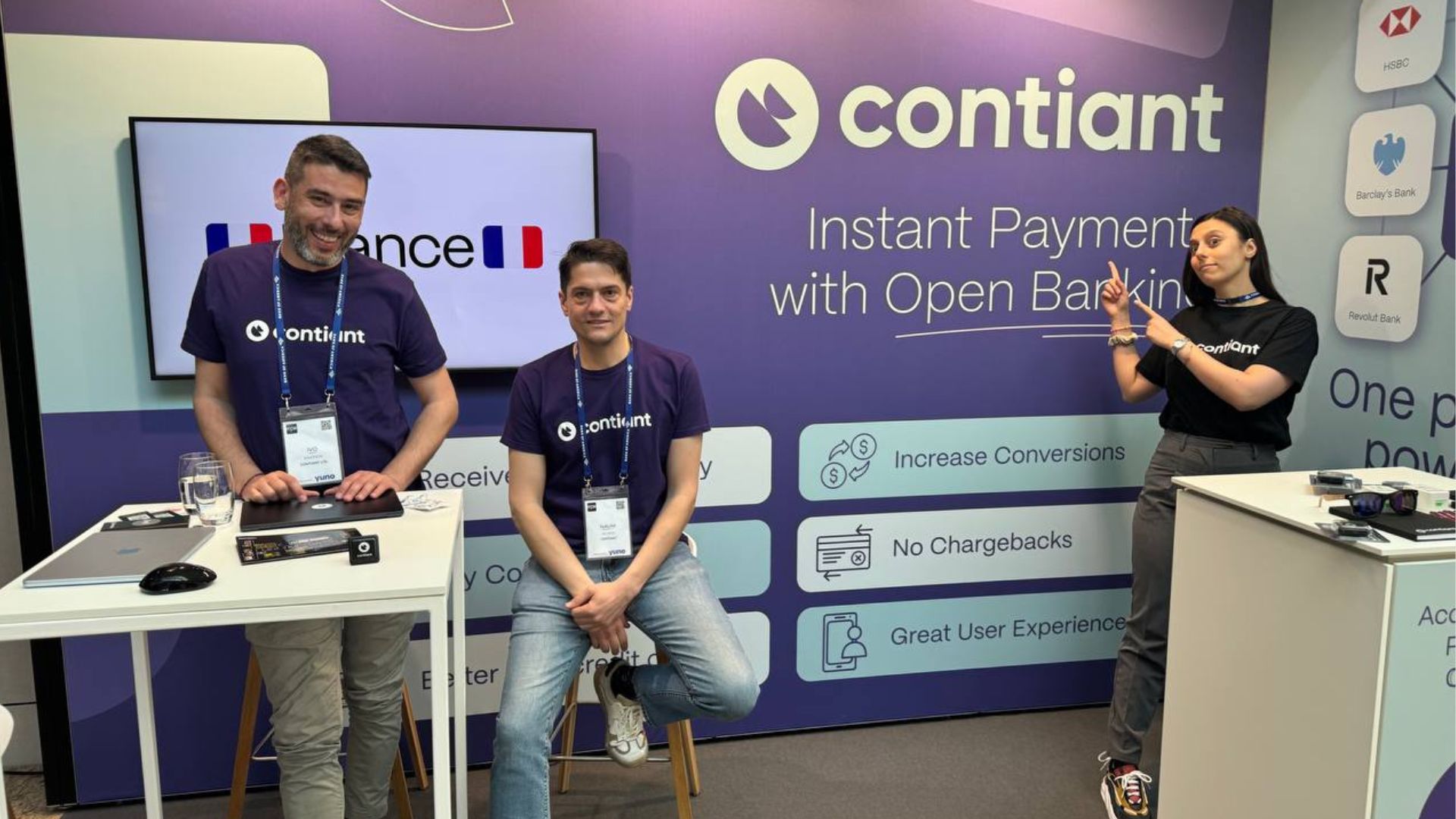
This is exactly the conversation we brought to ICE 2026. Across payments, iGaming and fintech, the focus has shifted from innovation headlines to operational performance. The message was clear: infrastructure matters more than ever.
Contiant delivers Open Banking solutions that enable businesses to move money, access data, and embed financial services with confidence. The platform is built to support real-time use cases while meeting the expectations of regulators, partners, and customers alike.
In 2026, Open Banking proves its value in real moments, not ideal scenarios. Execution matters more than promises. Infrastructure is what holds it together.
And that is where Contiant continues to invest.


.jpg)





.png)


.png)
